
 |

 Email Signup
|
Subscribe
|
Login
Email Signup
|
Subscribe
|
Login
For Divers since 1975 The Private, Exclusive Guide for Serious Divers Since 1975 |
"Best of the Web: scuba tips no other source dares to publish" -- Forbes |
Walindi Plantation and MV FeBrina, PNGContents of this Issue: Walindi Plantation and MV FeBrina, PNG Diving with Helium May Be Limited Bahamas, Carriacou, Puerto Rico . . . Atomic Aquatics Recalls 4,200 Dive Computers in North America Is This Dive Operator Right or Wrong? Where Lionfish Eradication May Be Working Maiden Voyage on a New Dive Boat? Forget It Beware of the Hand-Biting Barracudas Amazing Diving Stories from One of Our Own Writers Editorial Office: Ben Davison Publisher and Editor Undercurrent 3020 Bridgeway, Suite 102 Sausalito, CA 94965 machetes, bare butts and cannibals are part of the package from the October, 2012 issue of Undercurrent
Dear Fellow Diver: Max Benjamin, the "First Father" of Papua New Guinea diving, purchased a cocoa plantation at Kimbe Bay in 1969, which he segued into an 800-acre palm oil plantation and a first-class dive resort. Alan Raabe came along later, and the two bought the liveaboard FeBrina (Fe = iron, Brina = salt water) in 1991 for Raabe to skipper. They put in moorings to avoid reef damage, and traveled to remote areas to administer inoculations. A preschool was built and another is in the works; water from Walindi's wells is shared via pipes to nearby folks.
At Walindi, the welcoming hostess cautioned us not to go barefoot. Getting betel nut spit on your feet is a common way of spreading tuberculosis (the deep-red toothy smiles of the locals spoke of the nut's popularity). And to avoid malaria, it's wise to wear bug spray and cover up in the late afternoons (and of course, be on a malaria prophylaxis). After a good sleep in a large, lovely bungalow, the night air filled with the calls of birds and frogs, I was ready to dive. When I arrived at the dock at 8 a.m, my gear was set up and off we went. A four-foot chop for the first three days made the hour-long trip to sites jarring in the 21-foot, outboard- powered, aluminum boat. But what reefs! On the first dive, at Joelle's, a dizzying variety of tropical fish slowly swam about the seamount, as did schools of barracuda, big-eye trevally and surgeonfish. Off by themselves were red-tooth and clown triggers. Clarks, spinecheek and pink anemonefish hid among waving anemone tentacles. I gave a wide berth to a patch of Corallimorpharia, whose toxic sticky substance can penetrate a wetsuit and burn like fire.
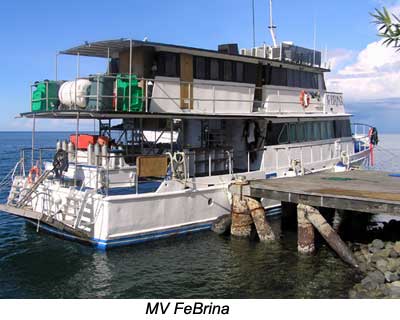
Max and his friendly son, Cheyne, run Walindi and employ approximately 90 workers. Seven locals provide security: Machetes, not guns, are the weapons of choice. The resort has 12 well-appointed bungalows facing Kimbe Bay; they lack air conditioning but screened windows on three sides let in the ocean breezes. Two additional four-room plantation units can get noisy. Electricity is via generators, and between 11 p.m. and 6 a.m., only two switches in a bungalow and the battery charging area (an Aussie three-pronged 240-volt) will operate. There is a mini-fridge and coffee/tea-making equipment. Well water is potable. A count of 37 guests is a "good full" (mainly Aussies and Japanese, many birders or hikers), according to Ema, Cheyne's fiancé and registration manager. I was there in late June, at the end of low season, and there were less than a dozen guests. The staff served dinners in the covered, open-sided dining room. Sunday Roasts offered a buffet of baked whole fish, tender roasted pork and chicken, and a variety of salads and vegetables. When the FeBrina returns to port, they put on a grill of steaks, hamburgers and sausages. The local steaks were flavorful but tough. Their only steak knife, flimsy and dull, had to be passed among diners. Food is plentiful and good, though occasionally there are shortages (they recently went three months without any cheeses, and before that, it was cereal and milk). Bananas, passionfruit and papaya were offered at breakfast and lunch. My favorite dessert was a banana crepe (pancake) with plenty of ice cream. Back to the diving. While I saw gigantic sea fans on several dives, one on Vanessa's Reef measured in at 12 feet. Bradford Shoals was a super dive, with schooling and circling barracuda, big-eye and bar jacks, dogtooth tuna and impressive leather coral. Otto's was bigger than life, with plate corals covering large areas. Exploring the crevices, ledges and small caves, I spotted young scorpionfish and a stonefish. Schools of barracuda and big-eye jacks hung in the deep, as did two sharks. Most impressive was a blown-up, silky orange anemone with short tentacles -- it looked just like a pumpkin sitting alone on an elevated coral head. Inside were two pink anemonefish measuring a quarter inch and two inches, respectively. I must say I've never seen so many bare butts and pee streams. In Kimbe Bay, we were out for two to three dives, with lunch in between, but no bathrooms on any of their three boats. The men aboard had no compunction about peeing over the side or going to the bow, dropping suits and letting loose. One woman lowered her wet suit, stooped and peed while standing on the ladder. I tried to be more proper by removing my wetsuit and diving in the water, but the biting sea lice had me making quick order of it. For lunch, we would tie up to Restorf Island, and the crew would lay out the food -- better than the dinners -- on a cloth covering the flat tank storage area with real plates and silver. Sample fare included curried fish, rice, papaya, coleslaw and tender, thin-sliced roast beef. One day we dived offshore, a virtual muck dive that included miniscule wrasse, threadfin, pixie and dwarf hawkfish, scorpionfish and mantis shrimp. Divemaster Lucas was adept at pointing out the tiniest of crabs -- tiny green, boxers, pompom and shrimp, well camouflaged on black coral, crinoids and anemones. I learned from another divemaster who hunted pigs with spears with his grandfather that a measure of a man was how many pigs he owned. He proudly told me he owned five. Dan and Cat, Walindi's dive managers, are highly visible before and after dives. Dan would stop by the dinner table to brief us on the next day's diving, asking for requests. Cat thoroughly answered my questions before and during the trip. In fact, when I realized after I got back home that I had left my expensive sunglasses there, I emailed Cat, who had found them. A kindly Aussie mailed them to me when she got home. Everyone I encountered at Walindi was courteous, helpful, ready with a smile and eager to please. Westerners manage the show but locals get the job done. Then it was on to the MV FeBrina, a 73-foot, three-decked former Australian fishing vessel brilliantly converted into a liveaboard dive boat by Captain Raabe. The covered dive deck's functionality is top notch. Each guest has two large wooden stacked bins; on top is ample space for working on cameras. The crew changed water for cameras and mask-dunking daily. Charging stations, both 240-volt and 110-volt, are on the deck.
Cabins, including two singles, are on the lower deck, bow and stern, with steep stairs leading down from the air-conditioned lounge. Heads are adequate but sinks are tiny. There was plenty of hot water for showering, towels were changed daily, my bed was comfortable, and best of all, individual AC could be set to personal preference. We were advised to leave the porthole closed. Diving was easy: Analyze and record Nitrox, suit up, listen to the barebones but adequate briefing and don your tank. Walk down the few wide steps backwards, and Joe is there with your fins. Stride at water level into welcoming 85-degree water with up to 100-foot visibility and no current. Twenty-one dives were offered on my six-night trip. FeBrina's policy is to have two divers in the water with guests. Junior, a deckie, not a divemaster, often chose to dive, especially when there was a shark feeding and I was alone on the other side of the reef. This young man in his 20s was a terrific spotter of the tiniest, most esoteric camouflaged critters. We made sport of seeing who could make the "best find." A floating "pod" of tiny, nearly developed, pinkish eggs loosely attached by only a thread to each other had us both puzzled While the FeBrina can take 12 divers, we were four Americans and a Belgian, ages 28 to 70. Besides me, there was a professional underwater photographer averaging 1,000 shots per day, a geneticist who has been diving 50 years, a nomadic bon vivant seeking sharks around the world and a psychologist bent on identifying each and every critter spotted. Relaxing after the last dive of the day, we shared much laughter and diving tales among us four and, of course, Captain Raabe. The schedule was a diver's dream. Continental breakfast before the first dive at 6:30 a.m. A full breakfast to order, then the second dive at 9 a.m. A snack, then the third dive at 11:30. Lunch, siesta, then the fourth dive at 3:30 p.m. Snack, a night dive at 6 p.m., then dinner. Josie suggested three rules: Keep dives to 60 minutes because the vessel needs to travel during the day, come up with 500 psi (which was not monitored), and when close to land (which we never were), ladies keep their thighs covered so as not to insult the locals. Silver-tip, white-tip and gray reef sharks joined us on most of the dozen dives at Fathers. At least one swam within 10 feet on each dive. FeBrina encourages the sharks to stay around several sites by hauling down a bait box, to the photographers' delight, but preferring natural behavior, I would stay on the other side of the reef. Once, two large white-tips followed me rather than the dive guide with the box. I watched my dive buddy, who was heading for the feeding spot, unaware that two were on his fins, close enough to be kicked -- and they were. Captain Raabe was going to chum a site we had just dived, and the sharks swimming there were close and amazing to behold. This time, the bait box would be 30 feet underneath the boat, and there was no place to avoid them. I asked Captain Raabe if he would consider not doing it, but he berated me for being "one of those nut jobs" and if I wanted a "natural" setting, then I shouldn't be diving. "You think it's natural having you down there?" Donning his tank, he continued his harangue. Sharks swam shallow at the back of the boat, almost at the surface. I chose not to dive. (Digger, the guide handling the box, got a nasty bite on the thumb by a red emperor snapper). Critters were friendly at Father. After posing for photos, a broadclub cuttlefish, settled down to his natural coloration. As he came closer partially unfurling and retracting his tentacles, I "mimicked" him by extending my hand toward his extensions and enjoyed the slow motion dance. On Meil's, a bannerfish circled within a foot for 20 minutes; when I hovered, he would stop inches in front of my goggles. Turtles at Jayne's took pieces of sponges from divers' hands. Our four night dives were good, not great. Divemasters were tenacious about prodding octopi out of their crevices, which was too much hands-on-critters for me, but then, I'm not a photographer. A morning dive at the Arches at Father's Reef on the Fourth of July seemed very appropriate as the corals and sponges were bursting with colors, much like fireworks. I swam by six five-foot-long bumphead parrotfish on my way down. On the limestone mount, two small octopuses crawled about. The only arch is around 96 feet, and if there was another, I never found it. As dozens of pyramid butterflyfish swarmed around the seamount, I made my way slowly up the mooring rope, encrusted with tiny critters, allowing time to explore. It's said that 70 percent of all Indo-Pacific marine species can be found in PNG. About all I missed were orcas and hammerheads, although there were sightings a few miles from where I was diving. However, the dolphins tried to make up for it with regular appearances. And both Kimbe Bay and Fathers are great places for nudis. The most elegant was a white, yellow-fringed heron ardeadoris spotted at Meil's. The flabellina bicolor and colorful exoptata were nicely spotted, too. Ending the last dive of my trip, a fellow diver and I turned sommersaults in the pure joy of these outstanding waters. While on board, I read a just-forlaughs article Captain Raabe published in Ocean Realm in the late '90s, in which he was given advice from his "spiritual mentor" in Japan. It goes something like this: Life is like the shrimp-goby relationship -- symbiotic, always seeking a balance -- so relax, and let it happen. Max Benjamin and Alan Raabe, above and below the water, are great examples of symbiosis and seeking equilibrium in a world where doing so is often not easy. Travels are not easy, either. The 8 a.m. flight departing Hoskins was simply not going to, which is often the case. I returned to Walindi for a breakfast and six-hour wait. Of course, this led to a cascade of missed planes -- every single one -- and forced overnights in Port Moresby and Brisbane. Air Nuigini arranged good billeting and a fine allowance for food both places. Stopped by police armed with M-16's and grenade launchers on my way back to the airport was a fitting goodbye to this untamed land. They quickly passed us on. "Take Me Home Country Road" was blaring on the van's radio as we continued on to the airport. -- J.D.
|


 Knowing Undercurrent readers' glowing reports of the
diving and facilities, I signed up for 45 hours of doorto-
door travel, totaling 11,000 flight miles. Flying
from Port Moresby into Hoskins, West New Britain, I was
struck by the dense greenery covering the mountains, and
a volcano spewing smoke. As the terrain leveled, large
chunks of the jungle had been replaced by neat rows of
palm oil trees, refineries and holding tanks. On the
drive to Walindi Resort, we passed houses on stilts with
no running water, and ladies carrying loads on their
heads or selling a few items they had grown. A newsworthy
tidbit came
on the radio. There
had been an arrest
of 29 cannibal
cult members in the
Highlands, eight of
them women, for eating
raw human brains
and making soup
from their victims'
penises. I asked the
driver, a local,
if it were true or
a hoax. "Oh, yes,
very true," was his reply. "Popular some places." Michael
Rockefeller met a similar fate, they
say, in the 60s.
Knowing Undercurrent readers' glowing reports of the
diving and facilities, I signed up for 45 hours of doorto-
door travel, totaling 11,000 flight miles. Flying
from Port Moresby into Hoskins, West New Britain, I was
struck by the dense greenery covering the mountains, and
a volcano spewing smoke. As the terrain leveled, large
chunks of the jungle had been replaced by neat rows of
palm oil trees, refineries and holding tanks. On the
drive to Walindi Resort, we passed houses on stilts with
no running water, and ladies carrying loads on their
heads or selling a few items they had grown. A newsworthy
tidbit came
on the radio. There
had been an arrest
of 29 cannibal
cult members in the
Highlands, eight of
them women, for eating
raw human brains
and making soup
from their victims'
penises. I asked the
driver, a local,
if it were true or
a hoax. "Oh, yes,
very true," was his reply. "Popular some places." Michael
Rockefeller met a similar fate, they
say, in the 60s.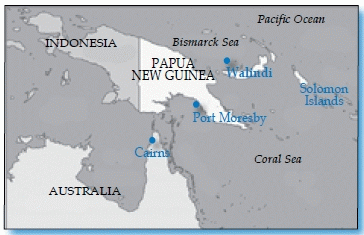 In Kimbe Bay, the variety of soft and hard corals was staggering. Large
sea fans often harbored glorious nudibranchs. Red sea whips formed their own
little forest while razorfish moved in choreographed unison. My depths ranged
from 70 to 113 feet, and there was generally a safety stop to look for nudibranchs
or observe the schooling fish. Visibility varied from 50 to 150 feet.
Land and water temperatures were in the mid-80s. Perfect.
In Kimbe Bay, the variety of soft and hard corals was staggering. Large
sea fans often harbored glorious nudibranchs. Red sea whips formed their own
little forest while razorfish moved in choreographed unison. My depths ranged
from 70 to 113 feet, and there was generally a safety stop to look for nudibranchs
or observe the schooling fish. Visibility varied from 50 to 150 feet.
Land and water temperatures were in the mid-80s. Perfect.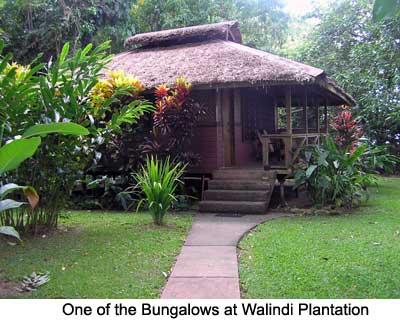 When I mentioned I was going to dive the FeBrina, most friends told me,
"You're gonna LOVE Captain Raabe. What a character!" True on the second count,
questionable on the "love" part. It was difficult to deal with his irascible
behaviors or to listen to his diatribes about his handpicked crew, previous
guests and locals -- all of which were peppered with colorful "politically questionable"
remarks (such as "Pat a Kiwi on the head and she'll drop her drawers"). On the other hand, he told captivating PNG adventure stories and even
showed a vulnerable, kind side toward day's end. Everything about him was on
overdrive, bigger than life. A word of advice: If you're going to ask for clarification
of a decision, do it after he goes
diving to decompress. Twice, I and another
diver engaged in heated disagreements with
him over dive-related issues that carried
over to the dive deck. The last day before
heading to dock, Captain Raabe had planned
for two dives. We asked for a third, but he
belligerently said that we were crazy because
we were flying the next morning. We countered
with the shallowness of the dives and
what our dive computer indicated -- going
with DAN's recommendation of 18 hours nofly
was within our profiles. I suggested we
begin with a dawn dive instead of 6:30 a.m. for our first dive because we never
motored at night, but that was met
with flat refusal. Back and forth
we went, getting increasingly voluble.
Just before he stepped into the
water, he shouted that he was sick of
the lot of us, and that if we get the
bends, just don't tell him about it. We dived three morning dives under 60
feet, finishing by noon.
When I mentioned I was going to dive the FeBrina, most friends told me,
"You're gonna LOVE Captain Raabe. What a character!" True on the second count,
questionable on the "love" part. It was difficult to deal with his irascible
behaviors or to listen to his diatribes about his handpicked crew, previous
guests and locals -- all of which were peppered with colorful "politically questionable"
remarks (such as "Pat a Kiwi on the head and she'll drop her drawers"). On the other hand, he told captivating PNG adventure stories and even
showed a vulnerable, kind side toward day's end. Everything about him was on
overdrive, bigger than life. A word of advice: If you're going to ask for clarification
of a decision, do it after he goes
diving to decompress. Twice, I and another
diver engaged in heated disagreements with
him over dive-related issues that carried
over to the dive deck. The last day before
heading to dock, Captain Raabe had planned
for two dives. We asked for a third, but he
belligerently said that we were crazy because
we were flying the next morning. We countered
with the shallowness of the dives and
what our dive computer indicated -- going
with DAN's recommendation of 18 hours nofly
was within our profiles. I suggested we
begin with a dawn dive instead of 6:30 a.m. for our first dive because we never
motored at night, but that was met
with flat refusal. Back and forth
we went, getting increasingly voluble.
Just before he stepped into the
water, he shouted that he was sick of
the lot of us, and that if we get the
bends, just don't tell him about it. We dived three morning dives under 60
feet, finishing by noon.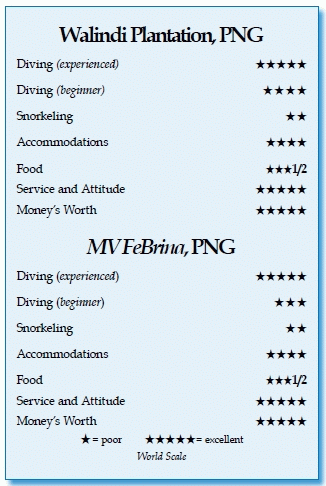 Regardless, the FeBrina is the
best-run vessel of the dozens I
have been on, thanks to a crew of
eight PNG locals and, yes, the salty
Raabe at the helm. Levo, the engineer,
has five years tenure. Josie,
the boat's cornerstone and 12-year
vet, serves as manager, dive briefer,
instructor and ombudsman, and can
handle the vessel if necessary. The
three "girls," including divemaster
Diane who was pinch-hitting, cooked,
served, cleaned cabins and handled
personal laundry for free. Digger,
another divemaster, and Junior and
Joe, known as "the boys," joined
Josie as dive deck crew. Most dives
are programmed in the FeBrina's automated
GPS system, and with various
crew comfortable at the helm, Captain
Raabe could be elsewhere while motoring.
Regardless, the FeBrina is the
best-run vessel of the dozens I
have been on, thanks to a crew of
eight PNG locals and, yes, the salty
Raabe at the helm. Levo, the engineer,
has five years tenure. Josie,
the boat's cornerstone and 12-year
vet, serves as manager, dive briefer,
instructor and ombudsman, and can
handle the vessel if necessary. The
three "girls," including divemaster
Diane who was pinch-hitting, cooked,
served, cleaned cabins and handled
personal laundry for free. Digger,
another divemaster, and Junior and
Joe, known as "the boys," joined
Josie as dive deck crew. Most dives
are programmed in the FeBrina's automated
GPS system, and with various
crew comfortable at the helm, Captain
Raabe could be elsewhere while motoring. Divers Compass: Round- trip airfares from the U.S. through
Brisbane run $2,500 to $4,000, depending upon stops and season;
get your visa in advance . . . A Walindi bungalow twin share
for four nights with 10 dives cost me $1,312 . . . On FeBrina,
six nights in a single cabin (it's typically eight nights) was
$2,261; Nitrox was $150 and good wine is complimentary at dinner
. . . I arranged my trip through Cliff at the dive travel agency
Reef & Rainforest (
Divers Compass: Round- trip airfares from the U.S. through
Brisbane run $2,500 to $4,000, depending upon stops and season;
get your visa in advance . . . A Walindi bungalow twin share
for four nights with 10 dives cost me $1,312 . . . On FeBrina,
six nights in a single cabin (it's typically eight nights) was
$2,261; Nitrox was $150 and good wine is complimentary at dinner
. . . I arranged my trip through Cliff at the dive travel agency
Reef & Rainforest ( 
I want to get all the stories! Tell me how I can become an Undercurrent Online Member and get online access to all the articles of Undercurrent as well as thousands of first hand reports on dive operations world-wide

| Home | Online Members Area | My Account |
Login
|
Join
|
| Travel Index |
Dive Resort & Liveaboard Reviews
|
Featured Reports
|
Recent
Issues
|
Back Issues
|
|
Dive Gear
Index
|
Health/Safety Index
|
Environment & Misc.
Index
|
Seasonal Planner
|
Blogs
|
Free Articles
|
Book Picks
|
News
|
|
Special Offers
|
RSS
|
FAQ
|
About Us
|
Contact Us
|
Links
|
3020 Bridgeway, Ste 102, Sausalito, Ca 94965
All rights reserved.