
 |

 Email Signup
|
Subscribe
|
Login
Email Signup
|
Subscribe
|
Login
For Divers since 1975 The Private, Exclusive Guide for Serious Divers Since 1975 |
"Best of the Web: scuba tips no other source dares to publish" -- Forbes |
An Orca Grieves Her Lost CalfContents of this Issue: French Polynesia: Moorea and Rangiroa Fighting SCTLD with Cocoa Butter and Chlorine Where a Border Wall is Really Needed Panama, Palau, Belize, Philippines Fifteen Years Ago Cocos Island Swarmed with Turtles. Why Have Many Disappeared? Abbreviations: Writing in Shorthand Held Hostage Until Signing a Liability Waiver Unqualified Red Sea Liveaboard Crews Editorial Office: Ben Davison Publisher and Editor Undercurrent 3020 Bridgeway, Suite 102 Sausalito, CA 94965 from the February, 2025 issue of Undercurrent
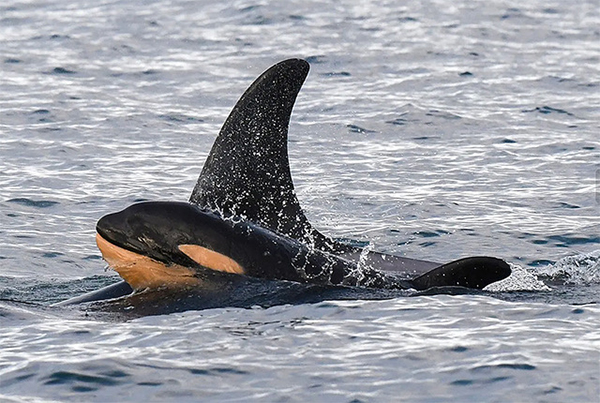
The story of Tahlequah (aka J35) the orca shocked the world in 2018 when she carried her dead calf (that lived only half an hour) for 17 days and more than 1,000 miles. Since then, she's had two offspring in Washington Stats Straits of Juan de Fuca that survived. But again, for at least 11 days, she carried another dead calf on her head, which had lived only a week. That's how mother orcas express their grief for a dead offspring. Every time the calf slides off her head, Tahlequah has to dive down and pick it up - it weighs hundreds of pounds - before the waves carry away the calf. Deborah Giles of the nonprofit Wild Orca worries about the toll it takes on Tahlequah because she can't forage when carrying the calf. Barbara J. Kingman, the author of the book How Animals Grieve, says there's no mistaking the nature of the phenomenon. There has been an increase in documented reports across animal species of their "expressing sorrow over the death of a loved one." She said more and more scientists are embracing the understanding that "many animals are expressing grief that emerges from love." The orca and her family, the southern resident J pod, were seen in Haro Strait off San Juan Island on January 10 before they headed west toward the ocean. - From the Seattle Times and several other sources. |



I want to get all the stories! Tell me how I can become an Undercurrent Online Member and get online access to all the articles of Undercurrent as well as thousands of first hand reports on dive operations world-wide

| Home | Online Members Area | My Account |
Login
|
Join
|
| Travel Index |
Dive Resort & Liveaboard Reviews
|
Featured Reports
|
Recent
Issues
|
Back Issues
|
|
Dive Gear
Index
|
Health/Safety Index
|
Environment & Misc.
Index
|
Seasonal Planner
|
Blogs
|
Free Articles
|
Book Picks
|
News
|
|
Special Offers
|
RSS
|
FAQ
|
About Us
|
Contact Us
|
Links
|
3020 Bridgeway, Ste 102, Sausalito, Ca 94965
All rights reserved.