
 |

 Email Signup
|
Subscribe
|
Login
Email Signup
|
Subscribe
|
Login
For Divers since 1975 The Private, Exclusive Guide for Serious Divers Since 1975 |
"Best of the Web: scuba tips no other source dares to publish" -- Forbes |
Flotsam & JetsamContents of this Issue: Malapascua, Moaboal, Philippines Mandarinfish at Lighthouse Reef Microplastics in the Ocean? It's Your Car Tires Passengers Board, but this Aggressor Doesn't Sail Cozumel, Mahahual, Roatan by Cruise Ship Florida Fish Spinning in Circles How Should We Tip the Dive Crew? Medical Examiner's Evaluation Form The Astounding Rate of Liveaboard Deaths More Details of the Sinking of MY Sea Legend Editorial Office: Ben Davison Publisher and Editor Undercurrent 3020 Bridgeway, Suite 102 Sausalito, CA 94965 from the April, 2024 issue of Undercurrent
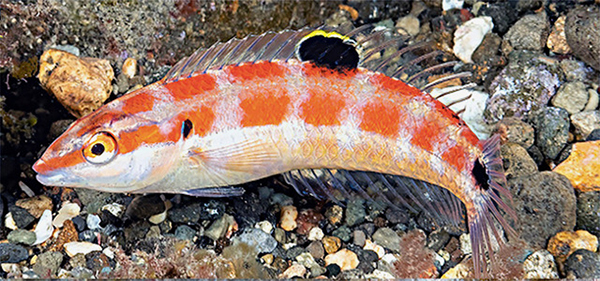
Catastrophic Regulator Failure. Craig Capehart (Carmel, IN) wrote that on February 25, he witnessed a diver from Caribbean Explorer II, off Saint Kitts, suffer a catastrophic failure of her regulator's first stage, resulting in a dramatic loss of air. She had just descended to 80 feet and had nearly a full tank. Several other divers surrounded her, and she was handed another diver's alternate air source to ascend safely. Her new generation regulator was a product of the California company for which she was apparently the marketing director. After watching a video of the free-flow and ascent, we emailed her for confirmation but never heard back. No surprise there. Belize Aggressor IV Back in the Water. After running aground at Lighthouse Reef Atoll last November (Undercurrent January '24), the popular liveaboard dry docked for repair of its damaged hull. Its first charter is scheduled for June 29. Tiger Sharks Take Up Photography. They've taken on a less than ferocious role in the Bahamas, leading marine scientists to discover the most extensive seagrass ecosystem in the world. Between 2016 and 2020, researchers fixed tags equipped with cameras on tiger sharks so that scientists could view the ocean floor from the tiger sharks' perspective. The cameras revealed a seagrass ecosystem of approximately 935,000 square miles. Protecting the area is vital, as seagrasses trap and store massive amounts of blue carbon (i.e., all the carbon that ends up in the ocean) in the seabed sediment. Divers Get Into Trouble. Malta is at the heart of the Mediterranean and is known for its clear, deep waters and benign conditions. It's popular with European divers, and on March 26, 19 of them got into difficulty shore-diving near the wreck of the Rozi. A sudden and unusual off-shore gale caused rough seas that blew the surfaced divers away from where they had entered and made exiting very difficult. Four made it to shore, but 15 had to be rescued by the Army. All divers were foreign nationals. Four were hospitalized, and one from the Netherlands later died in a hospital. (Malta Independent) Don't Charge Your iPhone on the Camera Table. We've seen reports of divers whose iPhones have suffered problems from dampness in the 'Lightning' connector due to the spray in the air on a liveaboard's aft deck. If you have the option, charge your phone wirelessly. Avelo. When we reviewed the new and unique diving system in our February issue, we reported that the only training facilities were in Australia, Catalina Island, California, and Bonaire. Since then, they have added centers in New Mexico. Spain, Oahu, and Key Largo. More information at www.diveavelo.com Another Diver Killed by Dive Boat Propellers. On March 10, divers returning to their day boat from the Regina Hotel in Hurghada, Egypt, were surfacing just as another boat, operated by ProDive, moored alongside it. A 50-year-old woman was drawn irrevocably into the turning propellers of the ProDive boat and suffered catastrophic injuries. Despite attempts to resuscitate her, she was declared dead. (taucher.net) No May issue. Undercurrent publishes 11 times a year, and May is our month off. We will continue with our regular emails to keep you abreast of issues and events in the scuba world. New For Fish Spotters. They say there's nothing new under the sun, but there certainly is underwater. Scientists discovered a new fish species in 2013 at the Mexican Revillagigedo Islands (Socorro), and, thanks to DNA tissue samples, they confirmed in 2022 that it was a new species since named Halichoeres sanchezi. If you fly off to look for it, keep in mind that Cabo San Lucas Customs may charge you a few hundred dollars as import duty on your valuable camera equipment.
Symphonic Reef Sounds Settle Coral Larvae. Underwater speakers that broadcast the hustle and bustle of thriving coral could bring life back to damaged reefs that are in danger of becoming ocean graveyards. Researchers from Woods Hole Institute, working in the U.S. Virgin Islands, found that coral larvae were up to seven times more likely to settle at a struggling reef when they played recordings of the snaps, groans, grunts, and scratches - the symphony of a healthy ecosystem. Gruesome End to Two Belgian Divers. The pair went missing on January 4 while diving in the Plate Taille reservoir, a 350-hectare lake, a scuba diving attraction, which is part of Belgium's Eau d'Heure complex of five reservoirs. A search team found the divers' equipment, including their rebreathers and DPVs, in a fragmented state, and the following day found the men's macerated remains downstream of the reservoir's hydroelectric dam. They had been sucked through its huge turbine. |



I want to get all the stories! Tell me how I can become an Undercurrent Online Member and get online access to all the articles of Undercurrent as well as thousands of first hand reports on dive operations world-wide

| Home | Online Members Area | My Account |
Login
|
Join
|
| Travel Index |
Dive Resort & Liveaboard Reviews
|
Featured Reports
|
Recent
Issues
|
Back Issues
|
|
Dive Gear
Index
|
Health/Safety Index
|
Environment & Misc.
Index
|
Seasonal Planner
|
Blogs
|
Free Articles
|
Book Picks
|
News
|
|
Special Offers
|
RSS
|
FAQ
|
About Us
|
Contact Us
|
Links
|
3020 Bridgeway, Ste 102, Sausalito, Ca 94965
All rights reserved.